Your users don't need to know about gas. You need less machinery.
Oct 2, 2026

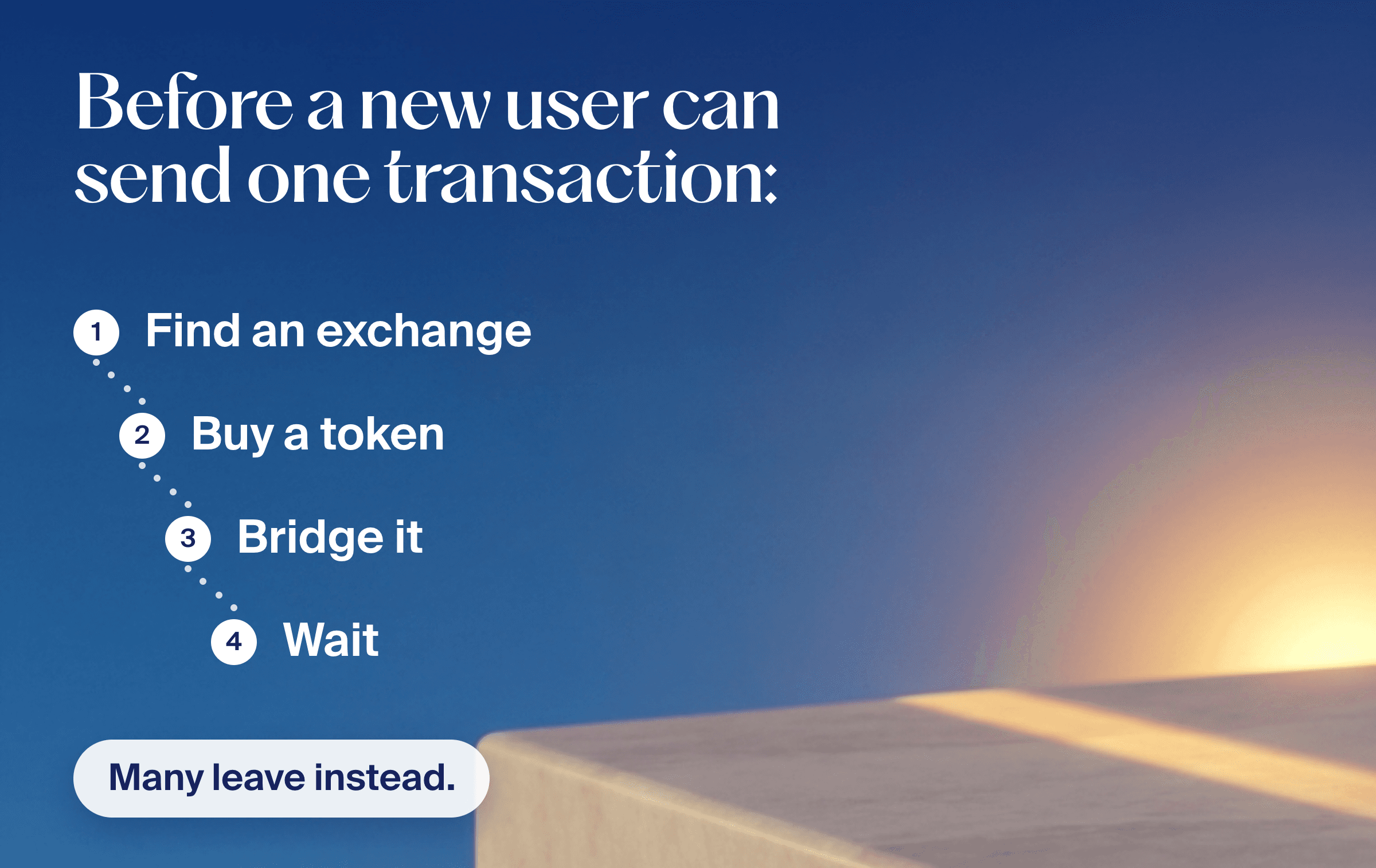
Your user has signed in and is ready to make their first transaction. Then the app asks them to acquire a gas token.
That can mean finding an exchange, buying a token they did not come for, moving it to the right network, and returning to your app. Even when the network fee is small, the errand interrupts onboarding.
In card payments, the merchant pays the processing fee and the customer gets on with their purchase. An app can make a similar choice for blockchain transactions: pay the network fee for its users. The fee still exists, but acquiring the token to pay it no longer has to be the user's first task.
Sponsorship adds work for the developer
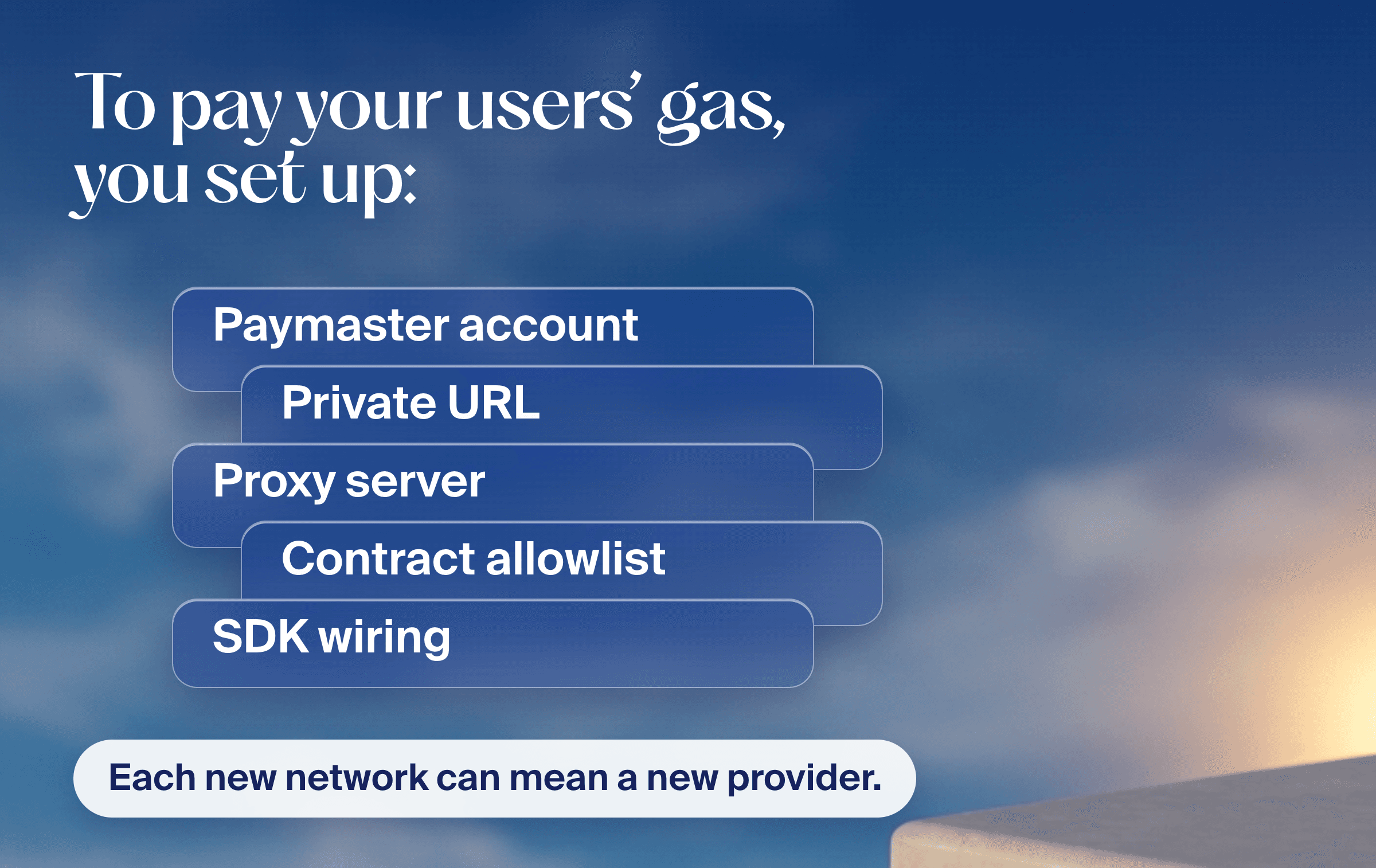
On EVM networks, a paymaster can sponsor the gas for a smart-account operation. A managed provider can handle much of the infrastructure, but the developer still needs to connect sponsorship to the app and decide which transactions it will pay for.
Depending on the integration, that work can include an account with a provider, a protected endpoint or proxy, funding, allowlists, and SDK wiring. The setup also differs across chain families. An EVM paymaster integration does not by itself provide Sui or Solana sponsorship.
What the gas tank is
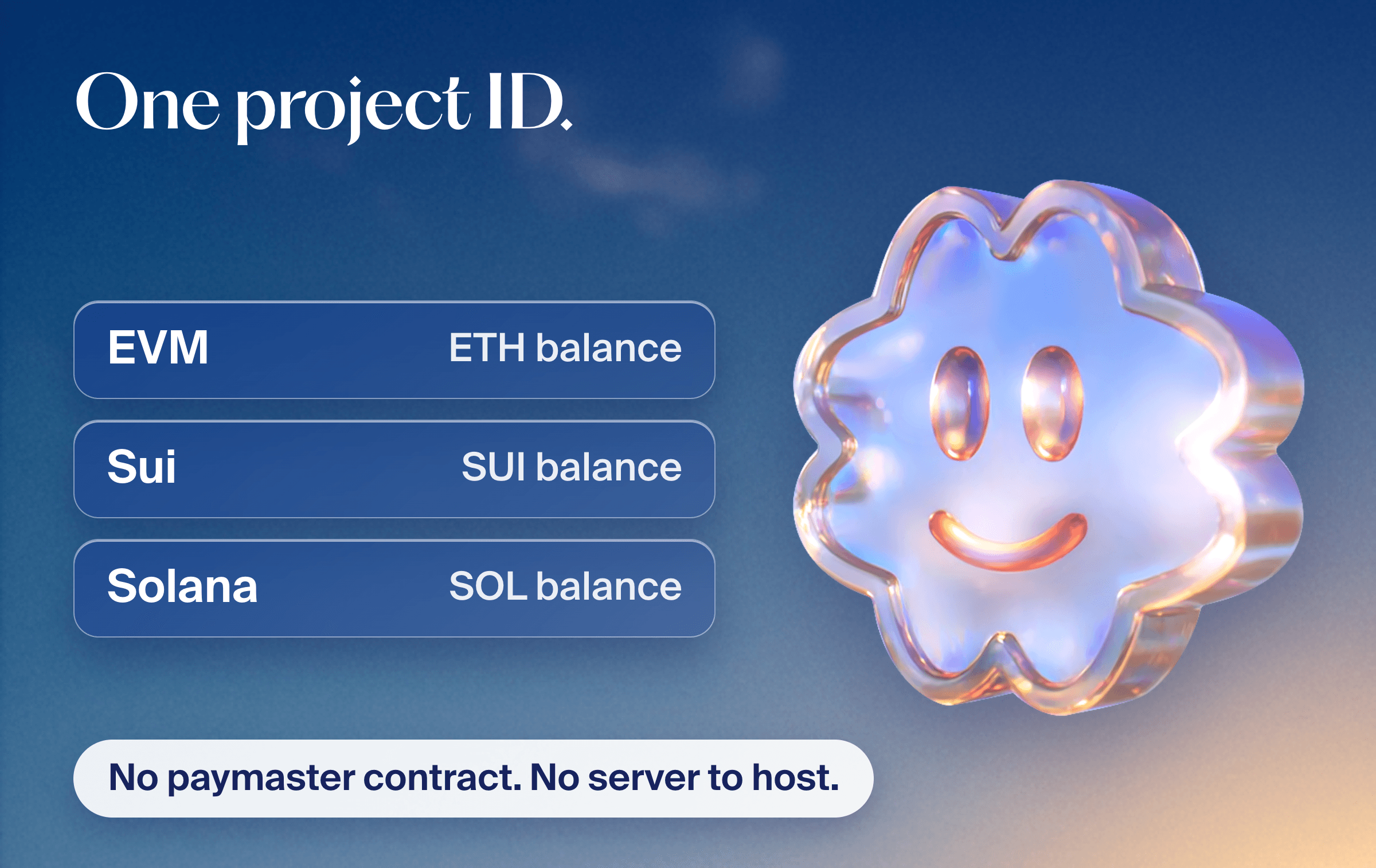
Gas Tank is the built-in sponsorship service in the human.tech Wallet Protocol (WaaP). A developer creates one project to sponsor eligible transactions for their app's users on supported EVM networks, Sui and Solana. WaaP runs the sponsorship infrastructure, so the developer does not need to deploy a paymaster contract or host a sponsorship server.
The project ID connects the app's SDK integration to its tank. The developer funds the tank and configures which targets and domains it covers. Eligible requests can then draw from the project's balance.
Balances are separate by token: ETH pays for eligible EVM sponsorship, SUI for Sui, and SOL for Solana. One ETH balance can cover supported EVM networks; it is not converted into SUI or SOL.
How it works
The user reviews and authorizes the transaction. WaaP handles the chain-specific sponsorship path:
- EVM: WaaP's treasury prefunds the sender with ETH for an eligible transaction. The tank is billed for that treasury outlay, including delivery costs. Any prefunded ETH the transaction does not use remains in the sender's wallet.
- Sui: WaaP can use a sponsored transaction from its Sui gas pool when the sender lacks SUI. The tank reserves the gas budget, settles the actual gas cost, and releases the unused reservation.
- Solana: WaaP can use Kora as the fee payer when sponsorship is needed, then settle the fee against the tank's SOL balance.
Sui and Solana automatic sponsorship applies to eligible transactions that WaaP broadcasts. A request that only returns a signature is not sponsored. Solana transactions that are already partly signed or require a preserved blockhash also remain outside that automatic path.
The Gas Tank integration guide covers configuration and supported workflows.
Where it stands
Gas Tank was announced on October 1. Sponsorship is available through the WaaP CLI and SDK on supported EVM networks, Sui and Solana. The wallet app's top-up screen supports SUI and SOL; EVM top-ups remain hidden there.
To sponsor your app's transactions, start at the Gas Tank console, fund the balances your app needs, and configure its coverage. Your users can get to their first transaction without a separate gas-token errand.